
Breaking the Mould: Building Communications with Truly Diverse Narratives
Diversity of narratives is not a trend. It is a fundamental, conscious shift we must adopt in how we understand communication. Particularly because rich stories shape how civilisations, communities and societies think, feel, interpret, and respond to the world around.
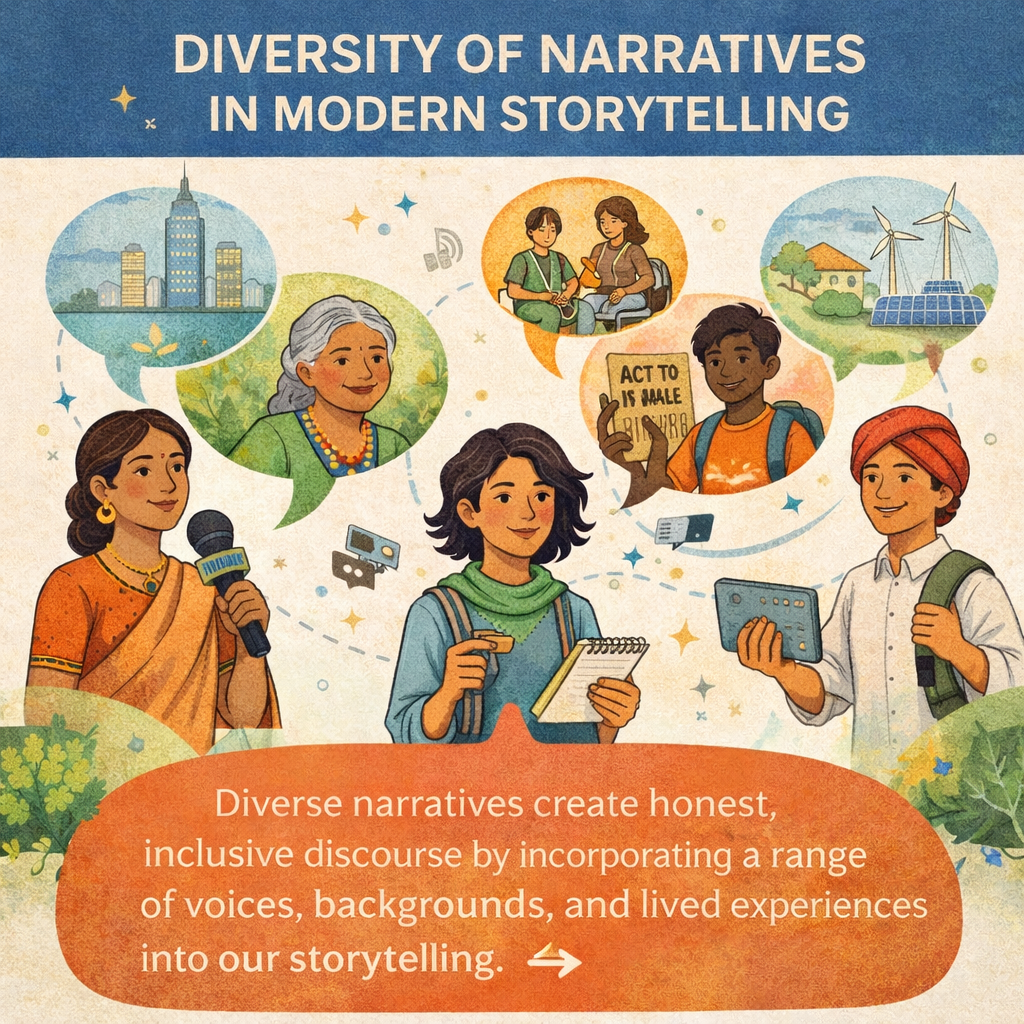
Storytelling has always played a critical role in communications strategy, particularly because stories have shaped how civilisations, communities and societies think, feel, interpret, and respond to the world around. Such stories influence public opinion, create shared meaning, and form the bedrock of collective memory.
The modern world of communications is dominated by complex messaging and a web of media; a single viewpoint is never adequate to capture the richness of human experience. Yet, most present-day communications—from brands, PR or social media—present extremely narrow points of view. Therefore, as communications professionals, we must make an effort to kick-start conversations with our diverse yet inclusive narratives, particularly in India, where diversity is at the heart of its nationhood.
Diversity of narratives is not a trend. It is a fundamental, conscious shift we must adopt in how we understand communication. When we incorporate a range of voices, backgrounds, perspectives, and lived realities into our storytelling, we create discourse that is more honest, inclusive, and reflective of the communities we try to engage and influence. This builds trust, deepens connection, and positively delivers our communications campaign to a much broader audience.
Diversity of narratives: my understanding
Communities, identities, and micro-identities are rarely monolithic; they have variations within themselves. For example, even conventional gender identities, male and female, are further subdivided into multiple groups by combinations of social, economic, racial, caste, geographic, age, religious, occupational, and other such identifiers.
Many of these subgroups have historically been marginalised or overlooked in society, and therefore, in mainstream narratives. Diverse narratives allow inter- and intra-group differences to be seen, heard, and valued. They enrich understanding, broaden discourse, and reveal nuances that singular dominant narratives often flatten.
Thus, narrative diversity is a conscious practice of acknowledging and incorporating a variety of perspectives, including those of historically underrepresented groups. Highly diverse narratives deliberately crafted by communications professionals are creatively challenging and conversation kickstarters at multiple levels: the professionals themselves, the clients (brands, companies, agencies), and the audience receiving the communications campaigns.
This multiplicity is essential in communication because it moves us away from oversimplified stereotypes and towards more complete, layered portrayals. It acknowledges that truth is seldom singular; it is a mosaic of realities intersecting.
Why Is Diversity of Narratives Important?
We, the humans, are a multi-gifted species. We are multi-ethnic, culturally diverse, geographically adapted, with a mind-boggling variety of languages, foods, clothing, education, beliefs, faiths and more. Therefore, no community on the face of this planet is a one-dimensional force.
Therefore, when communicators present only one type of story repeatedly, they unintentionally erase many others. An effort to diversify storytelling, in fact, broadens the impact of our narratives by engaging a wider audience. Moreover, such a diverse narrative brings authenticity, enriching the discourse with realities that might otherwise remain invisible.
On the one hand, audiences seem to consume selective, one-sided narratives; on the other hand, they demand transparency, representation, and depth. When communications highlight varied perspectives, different cross-sections of the audience recognise themselves in the narrative and feel respected. This makes any communication more trustworthy and relatable. Such stories may spark intense conversations, even attract sharp criticism from a section of the audience. However, these stories ignite discussions that deliver value far beyond brand recognition, sales, and positive PR.
These diverse narratives oftentimes offer insights into needs, barriers, motivations, and aspirations that single narratives miss. Whether designing a conservation programme, a public health campaign, or a brand intervention, understanding multiple viewpoints leads to more effective, culturally rooted solutions. Given the multichannel, multilingual, and multimodal nature of modern communications, it isn’t difficult to adopt engaging multi-view narratives in campaigns. For example, we must not forget that different sets of audiences use and engage with various channels, languages, and modes differently. Thus, introducing diverse narratives challenges communicators’ assumptions and fosters self-reflection among creators and audiences alike. It promotes empathy and reduces unconscious bias.
How do we achieve narrative diversity?
Let us first understand that broadening narrative is a deliberate, thoughtful, and sometimes challenging process. And, for this effort to be truly meaningful, it must transcend mere tokenism. The decision to adopt a diversity of narratives in communications must lead to a rethinking of how we research, plan, and design content, as well as the values that guide our storytelling.
Storytelling begins with intentional and deep listening. Indian thought leader and philosopher, J. Krishnamurti, simplifies the act of listening in ‘Commentaries on Living’.
To listen, there must be attention, and where there is resistance, there is no attention.
Thus, the first step towards crafting diverse narratives is engaging with a broad cross-section of stakeholders, even those who fall outside our comfort zone. Listen to these stakeholders articulate their experiences in their own words before we begin structuring the narrative.
If the communications strategy and budgets permit, participatory storytelling methods work best. Co-creation brings meaningful exchange and often builds mutual trust in storytelling. The participatory approach also helps in actively identifying and plugging the gaps, for example, class or gender biases, or urban vs rural, linked to higher and lower spending. Consciously making an effort to fill these gaps makes storytelling inclusive while enhancing the representation of audience categories.
I think communicators and creators must also pay particular attention not to dumb down or oversimplify the narrative about communities or issues. Highlighting nuances and complexities, sharing deeper connections, exploring deeper undercurrents and communicating them through campaigns brings a sense of authenticity to stories. Such concerted effort makes communication a lot more human and believable.
The diversity of narratives is not merely a communication technique. It is a commitment to honesty, equity, and inclusivity. In a world grappling with polarisation, climate change, cultural homogenisation, and misinformation, diverse stories can rebuild trust, restore nuance, and strengthen communities.
For organisations, brands, and NGOs, embracing diverse narratives unlocks more impactful communication, deeper community engagement, and more sustainable outcomes. For cultures, it preserves complexity, celebrates pluralism, and opens space for every voice to be heard.
At Ascharya Creative Communications, we believe that the stories worth telling are those that reflect the full richness of the human experience: messy, layered, diverse, yet profoundly meaningful.